Artist painting at an easel in a warm studio — The Studio Mentor

Master-Level Artwork Critiques, On Demand.

Elevate your technique with structured, 4-pillar academic feedback on composition, value, spatial depth, and tool mechanics. The 24/7 studio companion for serious artists.

Get Your Critique →

🔒 100% Private & Copyright Protected. We never use your artwork to train public AI models.
Analysis that shifts with your medium & intent

Select a medium and style — watch how the Visual Analysis Framework recalibrates its lens in real time. Expressionism is never penalised by Realist standards.

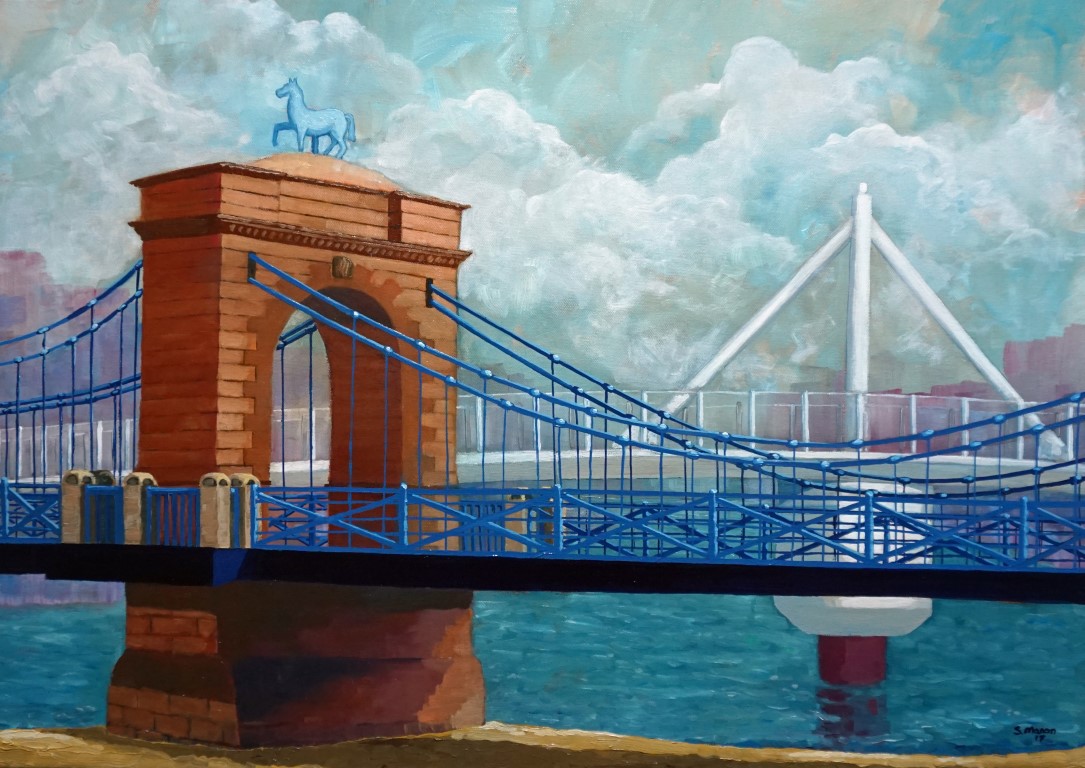
Oil painting submitted for AI critique — used as demo
Oil · Realism

Auditing impasto texture, glazing layer depth, and tonal blending consistency against academic realism standards.

Real artwork submitted to the Studio — shown with permission

Medium
Artistic Style
📐 Active Critique Criteria
  • Edge control & tonal blending
  • Glazing & impasto technique
  • Spatial & anatomical accuracy
  • Classical colour harmony

The conversation continues long after the report

Once your critique lands, your Studio Mentor opens a private, ongoing conversation. Here's what that looks like in practice.

💬 Live Session Preview — Watercolour artist, mid-series work
🎨
Sarah M. · Artist
The critique scored my background wash Edge Control 3/5. I used a damp-paper technique with a large round brush, but the pigment kept racing into the dry sections and creating these hard lines I didn't want. Where did it go wrong?
🖌️
Studio Mentor
The hard-line problem almost always comes from a moisture gradient mismatch — the damp zone dries unevenly, so the pigment races toward the drier edges before you can work it back. Two things to address: first, drop your water-to-pigment ratio by about 30% so the wash moves more slowly and you have a wider working window. Second, instead of dampening only the wash area, extend your pre-wet zone about 2cm beyond your intended boundary — that buffer absorbs the forward momentum before it hits dry paper.
🎨
Sarah M. · Artist
That makes sense. Should I have waited for the first wash to dry completely before going back in with the second value layer, or would wet-on-wet have been better for the softness I was after?
🖌️
Studio Mentor
For the atmospheric softness you're describing, wet-on-wet is the right call — but the timing window is critical. Work into the wash when it still has a damp-matte sheen: not wet enough to pool, not dry enough to resist. If you can see a slight gloss on the surface, wait 30–60 seconds more. At damp-matte, the second layer blooms in a controlled way and gives you that luminous, diffused edge. Going in too early causes the pigment flood you experienced; going in after bone-dry creates a hard line regardless of brush pressure.

Three things every artist needs to hear

📐

Designed to Improve Composition

The critique engine analyses your visual hierarchy, rule of thirds, negative space, and focal-point strength — then tells you exactly what to shift, not just that something feels "off".

🎨

Engineered to Improve Colour Harmony

Your dominant hue, temperature relationships, value contrast, and chroma balance are measured against your chosen medium and style — giving you actionable colour notes, not abstract theory.

Formulated for Maximum Visual Impact

From edge dynamics to surface quality and emotional resonance, the platform scores the intangible qualities that determine whether a painting commands attention in a gallery or gets walked past.


The rubric changes when the medium changes

Submit an oil painting and it won't be judged by watercolour rules. Every genre has its own technical language — and the Studio Mentor speaks them all fluently.

Traditional Medium

Oil Painting Critique

Fat-over-lean safety, impasto body, glazing layer depth, blending zones, and tonal warmth — assessed across both alla prima and multi-session processes.

  • ✦ Impasto & glazing technique
  • ✦ Fat-over-lean layer safety
  • ✦ Tonal blending & edge work
  • ✦ Classical colour harmony
Traditional Medium

Watercolour Critique

Wash purity, wet-on-wet versus wet-on-dry timing, granulation patterns, transparency depth, bloom management, and the preservation of paper whites.

  • ✦ Wet-into-wet edge control
  • ✦ Transparency & layering depth
  • ✦ Granulation & bloom control
  • ✦ Paper-white luminosity
Non-Representational

Abstract Painting Critique

No classical rules imposed. Abstract work is assessed for intentional mark-making, compositional tension, emotional resonance, and whether the surface energy matches your stated intent.

  • ✦ Intentional mark-making
  • ✦ Compositional tension & rhythm
  • ✦ Emotional & surface energy
  • ✦ Colour field & spatial depth

How It Works

Create an Account

Sign up free. Top up credits when you're ready to submit.

Fill In the Metadata

Tell the Studio Mentor your medium, tools, techniques, and artistic style — the more context, the deeper the analysis.

Upload Your Artwork

Drop in a photo of your canvas. The platform validates quality, extracts your colour palette, and gets to work.

Meet Your Mentor

Receive your structured report, then open the conversation. Ask questions, generate your Custom Studio Roadmap, download your PDF.


What artists ask before their first critique

Straight answers — no jargon, no hedging.

What's wrong with my painting — and why can't I see it myself? +

Most artists hit a point where they can feel something is off but can't locate it — that's not a lack of skill, it's a well-documented effect called perceptual habituation. You've looked at your own canvas so many times that your brain fills in what it expects to see. The Studio Mentor approaches your work with objective, fresh eyes every single time. It analyses composition, colour harmony, edge control, and medium-specific execution without any attachment to what you intended to paint — only what's actually on the surface.

Why doesn't my painting work, even when I've followed all the rules? +

Technically correct paintings can still feel lifeless — and that's one of the hardest things to diagnose alone. "Following the rules" doesn't guarantee visual impact. The Studio Mentor goes beyond technical compliance to assess emotional resonance, tonal drama, and compositional energy. It can pinpoint whether your painting lacks a clear focal hierarchy, whether your value structure is too even to create mood, or whether your colour temperature is working against the feeling you want to convey. Often the answer isn't that you broke a rule — it's that the painting needs one courageous decision made more boldly.

How can I improve my artwork without wasting another six months on the wrong thing? +

The most effective way to improve your artwork is to practise the right things, not just to practise more. After your critique, the Studio Mentor can generate a personalised Custom Studio Roadmap — a prioritised list of specific technical areas to work on, ordered by impact. No generic advice about "studying masters" or "painting daily." You'll know exactly which aspect of your current work to address first, and why that particular fix will have the most visible effect on the finished result.

Will I get an honest critique — or just empty encouragement? +

This platform was built specifically to solve the problem of vague, encouraging feedback that doesn't help you grow. Tools that respond with "beautiful work!" every time an artist uploads are useless for anyone serious about improving. The Studio Mentor delivers scored assessments across multiple technical criteria, with plain-English explanations of what's working, what isn't, and exactly why. The tone is always constructive — but the critique is always real, the same way a trusted mentor would be.


Get Your Critique → How it works →

🔒 100% Private & Copyright Protected — we never use your artwork to train public AI models.

Read the user manual  ·  Photography guide  ·  Get in touch

New to art?

Your Digital Art Studio Companion is coming soon

Adaptive coaching, sketchbook uploads, and real-time feedback — designed for absolute beginners.

🌱 Start Your Beginner Journey